Dragon Herbs Adaptogens & Three Treasures
Dragon Herbs · Adaptogens
Steadiness under everyday load
Adaptogens are the herbs that help the body hold its balance under stress rather than swing with it. Three Dragon Herbs formulas carry the Adaptogen badge, and a fourth — Schizandra — carries the rarest badge of all: Three Treasures, for a herb classified as tonifying Jing, Qi and Shen together.
- 4 formulas
- Adaptogen · Three Treasures
- Typical schedule 3-0-3
- Ships from Washington State
What adaptogens do in the tradition
The word adaptogen is modern, but the herbs are not. Gynostemma, Schizandra and chaga were tonic herbs for centuries before the twentieth century gave the category a name. What the term captures is the tradition’s observation that certain herbs help a person stay level — not stimulated, not sedated — while the demands of the day rise and fall.
Eileen frames Gynostemma, in particular, around AMPK and autophagy: the cellular housekeeping that an overfed, under-rested modern life tends to switch off. It is the adaptogen she points to in a programme that is already working on minerals, and its product page carries that framing in full. Wild Siberian Chaga brings the mushroom side of the same tradition, and Adaptogen Energizer combines several adaptogenic herbs in one formula.
Schizandra stands apart. The five-flavour berry is the one herb in this collection the manufacturer classifies as tonifying all Three Treasures at once — Jing, Qi and Shen — which is why the tradition gives it a place in almost any programme and why it carries its own badge here.
Adaptogens are a lean, not the whole programme. They are usually taken alongside a treasure-specific tonic: a Jing tonic for the reserve, a Qi tonic for the day. On their own they steady; combined, they steady something that is also being rebuilt.
Formulas in this collection
4 Dragon Herbs formulas, each with its verified badge
Every product page carries the traditional classification the manufacturer gives that formula, so what you see here is what you will see on the bottle’s page. Prices and availability are on the product pages.
Adaptogens
Classified as Adaptogen.
Dragon Herbs Adaptogen Energizer (100 Capsules)Several adaptogenic herbs combined in one formula for steadiness and vitality under load. Dragon Herbs Gynostemma (100 Capsules)Jiaogulan, the adaptogenic tea herb — the one Eileen frames around AMPK and autophagy support. Dragon Herbs Wild Siberian Chaga (100 Capsules)Wild-harvested birch chaga aged ten years or more — the adaptogenic tonic mushroom of the northern forests.
Three Treasures
Classified as Three Treasures: Jing, Qi and Shen together.
How to choose
Three ways in
Start here
Stress that will not switch off
Gynostemma is the gentlest daily adaptogen and the usual first purchase; it is also the one that fits a mineral programme most easily.
All three low
Jing, Qi and Shen all flagging
Schizandra — one herb, all three treasures — is the tradition’s answer when no single treasure is the obvious problem.
Mushroom
Prefer the mushroom tradition
Wild Siberian Chaga here, or Duanwood Reishi and Cordyceps in their own collections.
Still deciding? That is exactly what the TCM consultation is for — Eileen reviews your completed TCM health history questionnaire and matches formulas to your situation.
How these are dosed
The bottle gives the manufacturer’s general serving suggestion. For Dragon Herbs tonics the typical schedule is 3-0-3 — three in the morning and three in the evening, none at midday — unless your health provider specifies otherwise. Tonic herbs are judged over months, not days: the tradition takes them daily, gently, for the long run.
Adaptogens follow the 3-0-3 schedule and are taken daily; their value is in consistency. Schizandra is traditionally taken for weeks at a stretch and is well suited to being the one constant in a programme whose other formulas rotate.
Di Tao sourcing. Dragon Herbs works to the principle that a herb should come from the region where it grows best — the original terroir the classical texts named — rather than wherever it is cheapest to farm. It is one of the main reasons we chose this line over commodity Chinese herb brands.
From Eileen
I added Dragon Herbs to this store because mineral balancing and tonic herbalism answer different questions. A hair analysis tells me what your chemistry needs; the tonic tradition offers time-tested support for the reserve, the energy and the calm that a demanding life spends. I take these formulas myself, and when clients ask what to add once their minerals are moving, this collection is usually where I point them.
If you want help choosing, the TCM consultation is the right door — and if you already have a schedule from your provider, remember it wins over anything printed on a label.
Questions about adaptogens & three treasures
What makes a herb an adaptogen?
The modern term describes a herb observed to help the body stay balanced under stress without stimulating or sedating. In Dragon Herbs’ classification the Adaptogen badge marks the formulas whose traditional function fits that description.
What does the Three Treasures badge mean?
It marks a formula the manufacturer classifies as tonifying Jing, Qi and Shen together. In this collection only Schizandra carries it.
Why does Eileen talk about AMPK and autophagy with Gynostemma?
It is the framing she uses for the herb: autophagy is the cell’s own clean-up process and AMPK the energy sensor that helps switch it on. The Gynostemma product page carries her full explanation; it describes a mechanism of interest, not a medical claim.
Stay level while the rest is rebuilt
Three adaptogens and the Three Treasures herb, badges verified against the manufacturer, shipped from our Washington State warehouse at manufacturer retail prices.
Explore the other Dragon Herbs collections
These statements have not been evaluated by the Food and Drug Administration. These products are not intended to diagnose, treat, cure or prevent any disease. Traditional-function language records how a formula is classified within Traditional Chinese Medicine — it describes the tradition, not a medical claim. Badges reflect the manufacturer’s own Traditional Function description for each formula. WellnessShoppingOnline.com is operated by Nuco Enterprise Solutions LLC.
Refine by
Adaptogen
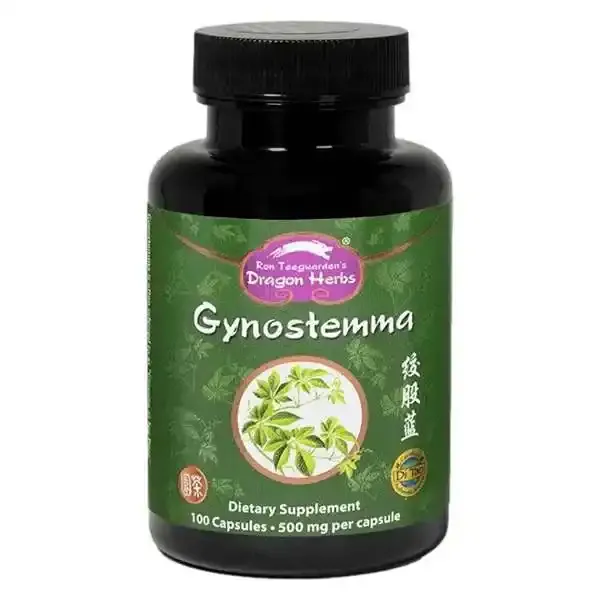
Dragon Herbs Gynostemma (100 Capsules)
Dragon Herbs Gynostemma (100 Capsules)
Premium Adaptogenic Gynostemma Capsules – Stress Resilience & Vitality Support
SKU 1977
$25.00
Three Treasures
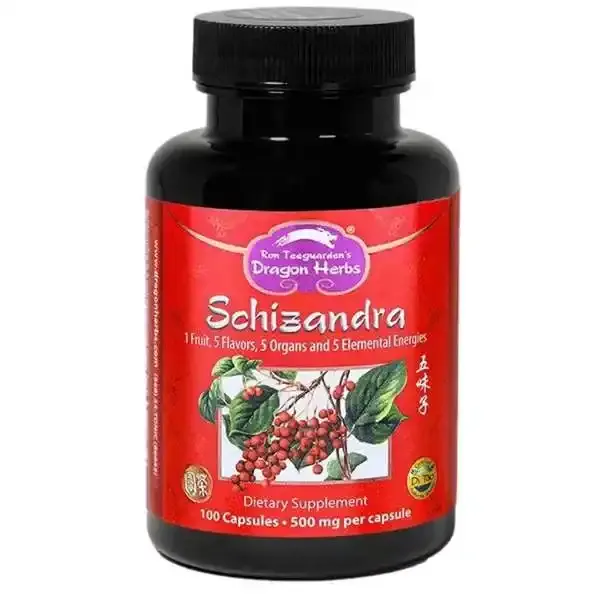
Dragon Herbs Schizandra (100 Capsules)
Dragon Herbs Schizandra (100 Capsules)
Premium Schizandra Capsules – Elevate Vitality, Skin Radiance, and Mental Clarity
SKU 2174
$39.00
Adaptogen

Dragon Herbs Wild Siberian Chaga (100 Capsules)
Dragon Herbs Wild Siberian Chaga (100 Capsules)
Sustainably sourced from ancient birch forests in Siberia, Russia. We use only wild-harvested Chaga, aged at least 10 years, to create a powerful extract that supports: Immune function, Liver health, Brain health, Healthy aging
SKU 2204
$37.00