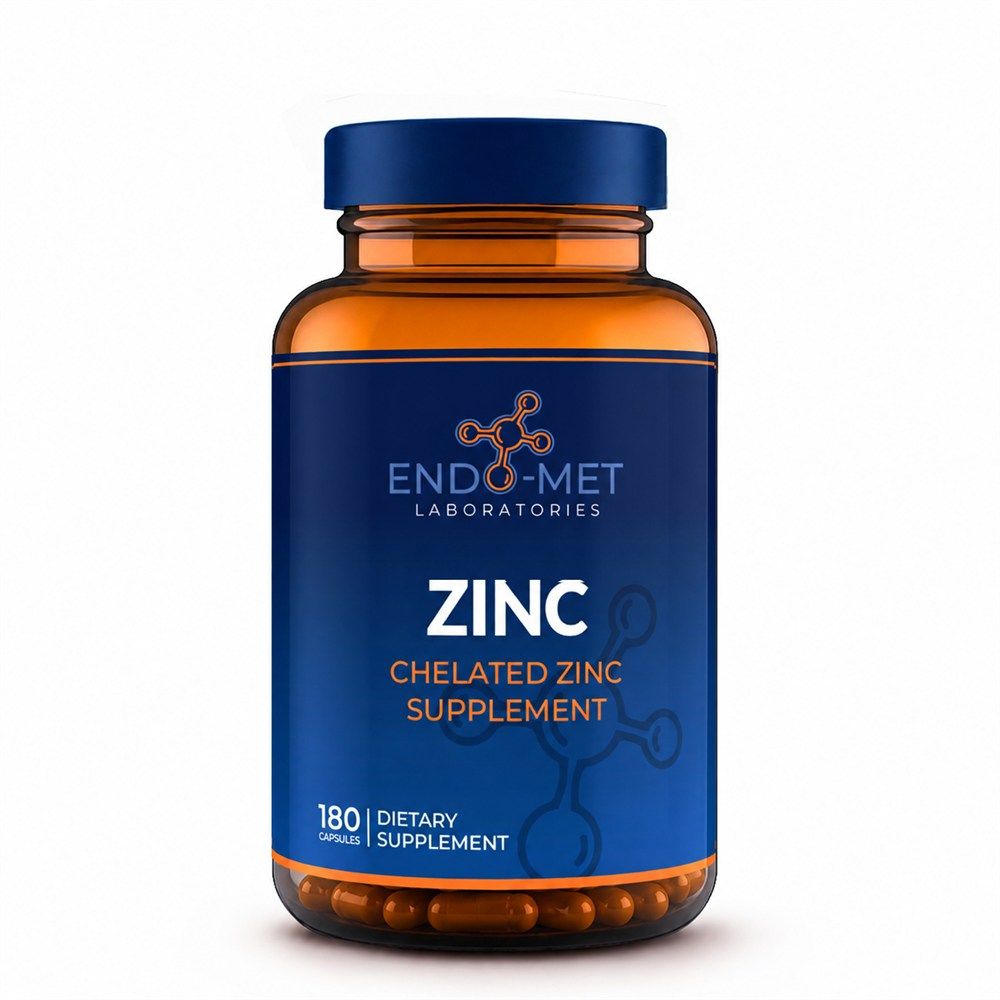
Endo-met Zinc (180 Capsules)
SKU 1081
$25.00
Lower Na/K
Extended Zinc Support for Immunity, Detox, and Mineral Balance
Estimated delivery time
Shipping: 3–7 days
In stock
Customer reviews
Reviews only from verified customers
No reviews yet. You can buy this product and be the first to leave a review.
Endo-met Zinc (180 Capsules)
Product Details
Brand: Endo-met Laboratories
MPN: ZN220
Availability: Shipped same day if ordered M-F by 1 pm PST
Shipping: Calculated at Checkout
Bottle Size: Large (120-270)
Supplied In: Tablets
Oxidation Type: Everyone
Primary Function: Lowers Na/K
Weight: 0.50 lbs
Endo-met Laboratories
Endo-met Zinc 180 Capsules by Endo-met Labs
Long-Term Immune, Metabolic, and Detox Support with Essential Zinc
Endo-met Zinc 180 Capsules provide an extended supply of 22.5 mg of zinc, delivered as a hydrolyzed rice protein chelate for optimal absorption. Zinc is a crucial mineral that supports immune health, detoxification, and metabolic processes. With over 70% of the population estimated to be zinc deficient, this supplement offers long-term wellness support, making it especially beneficial for individuals on a Nutritional Balancing Program or anyone needing enhanced mineral balance.
Product Highlights
Zinc's Benefits
Zinc is an essential mineral that plays a critical role in numerous body functions:
- Immune Support: Zinc is crucial for maintaining a robust immune system, helping in the development and function of immune cells to protect the body from infections.
- Wound Healing: Zinc supports skin health and is vital in the healing process of cuts and wounds.
- Antioxidant Properties: Zinc helps combat oxidative stress, potentially reducing the risk of chronic diseases.
- Enzyme Function: As a cofactor for numerous enzymes, zinc plays a role in metabolism and protein synthesis.
Key Ingredients in Zinc
Endo-met Zinc provides high-potency, chelated zinc for optimal absorption and mineral support:
- Zinc (from zinc hydrolyzed rice protein chelate): Provides 22.5 mg per capsule (150% Daily Value) to support immune health, detoxification, and metabolic balance.
Supplement Facts
One Capsule Contains:
- Zinc (from zinc hydrolyzed rice protein chelate): 22.5 mg (150% Daily Value)
Other Ingredients
Microcrystalline cellulose, vegetable stearic acid, croscarmellose sodium, magnesium vegetable stearate, silicon dioxide, film coating (hypromellose, glycerin, hydroxypropyl cellulose).
Available Sizes
- 90 Capsules
- 180 Capsules
Consultation and Support
For guidance on zinc supplementation, consider a hair analysis or consult with a healthcare provider. For more information, contact us at 888-932-2526.
*These statements have not been evaluated by the Food and Drug Administration. This product is not intended to diagnose, treat, cure, or prevent any disease.
Supplement Facts
Serving size: One capsule · 180 capsules per container
| Per serving | Amount | % Daily Value |
|---|---|---|
| Z | i | n |
| 2 | 2 | . |
| 2 | 0 | 5 |
† Daily Value not established. Other ingredients: Hypromellose (vegetable capsule), Nu-FLOW® (organic rice fiber).
How to read your dosage — the label is not your dose
The bottle says take one capsule a day. That is the generic label default, and it is almost never what a hair tissue mineral analysis actually calls for.
A lab report prescribes a schedule written as three numbers — morning, noon and evening:
| On your report | What it means |
|---|---|
| 1 | One capsule, once a day |
| 1-1-0 | One in the morning, one at noon, none in the evening |
| 1-1-1 | One with each of the three meals |
| 2-1-1 | Two in the morning, one at noon, one in the evening |
| 2-2-1 | Two, two, then one |
| 1-1-2 | One, one, then two — weighted to the evening |
| 3-3-3 | Three with each meal, nine a day in total |
Those are examples rather than a complete list — reports use many combinations, and the amounts are set from your own oxidation rate and mineral ratios. A formula the label treats as a once-a-day supplement may well be prescribed several times a day on a chart, or only in the morning, or not at all.
So do not work out how long a bottle will last from the label. Work it out from your schedule. If you are on 3-3-3, a 180-count bottle is twenty days, not six months.
If you have a report and are not certain how to read it, send it over — walking people through their own numbers is exactly what the text support is for.
What the Endo-met literature says about this formula
What the chart is showing when this is chosen
Zinc is used across most metabolic types in varying amounts, but the reading that most often calls for it is a sodium-to-potassium ratio that is normal or high rather than depressed.
That direction matters. Zinc lowers sodium and raises potassium, so it moves the sodium-to-potassium ratio downward — helpful when there is room for that, and the wrong move when the ratio is already low. It is the clearest example of why we do not simply supplement whatever reads low on a chart.
The zinc-to-copper relationship is read alongside it, with an ideal near 8 to 1.
Whether it applies to you is read from your own chart rather than from how you feel in a given week. If you have not been tested, that is where the decision starts rather than with a bottle.
Two different kinds of zinc deficiency
Dr. David L. Watts drew a distinction that matters a great deal when you are deciding how much zinc to take, because the two situations call for opposite approaches.
An absolute deficiency shows as a genuinely low tissue zinc level. A relative deficiency shows as a zinc level inside the normal range but low compared to an antagonist such as copper or cadmium. The reported normal range in hair is roughly 15 to 22 milligrams percent, with 20 considered ideal, and the ideal zinc-to-copper ratio is 8 to 1.
The practical consequence: absolute deficiency generally responds to modest amounts and is approached with caution, while relative deficiency can call for considerably more. You cannot tell which one you have from how you feel — only from the numbers.
What zinc works with, and against
Zinc is synergistic with magnesium, manganese, iron and phosphorus, and with vitamins A, B1, B3, B5, B6 and E. It is antagonistic to copper, cadmium, lead, mercury and several others, which is the basis for its role in toxic metal work.
Taken in large amounts over long periods, zinc can itself deplete copper, chromium, iron and manganese. This is a real and documented pattern, not a theoretical one, and it is the main argument for retesting rather than staying on a fixed dose indefinitely.
A note on white spots in the fingernails
These are widely attributed to zinc deficiency. Tissue mineral analysis research suggests they are more often associated with copper — they turn up most in people whose zinc is within normal range but low relative to copper, and are not commonly seen in people whose zinc is genuinely very low.
If you feel worse before you feel better
Nutritional balancing programs sometimes produce what Dr. Paul C. Eck and Dr. Lawrence Wilson called retracing, or a healing reaction. It shows up in one of three ways: an old symptom briefly returns, a current one intensifies for a while, or something new appears and then passes.
Three questions help you tell that apart from something that genuinely needs attention. Are you following a properly designed program? Is the rest of your lifestyle sound — sleep, food, rest? And were you feeling better in the period just before it started?
Cadmium is the classic illustration of why this happens at all. Cadmium has a sodium-retaining effect on the body, so as it is eliminated, sodium falls, the oxidation rate slows, and a person can feel more tired than when they began. It is the point at which people most often quit a program — and, in this framework, the point at which continuing matters most.
From Eileen Durfee
Curated by Practitioner Eileen Durfee, NBS (Nutritional Balancing Science), NASM-CPT — wellness educator, inventor with 10 U.S. and 6 international patents, author, and Nationally Certified Spinal Fitness Specialist
Zinc is the nutrient people most often self-prescribe, and the one where that goes wrong most quietly. What matters is not your zinc number, it is zinc against copper — the ideal is about eight to one. I have seen people take high-dose zinc for years, feel steadily worse, and turn out to need copper. You cannot feel this. You can only see it on a chart.
I came to hair analysis in 2010, under ARNP Julie Walker in Kennewick, Washington, and worked directly with Analytical Research Labs — testing family and friends until I could read a chart properly. I listened to every cassette tape Dr. Paul Eck recorded and read every newsletter that laboratory published. When I found out a degree in Nutritional Balancing existed, I signed up with Dr. Larry Wilson in August 2011, and I have practised independently since the autumn of 2017. The most useful thing I can offer is not a longer product list — it is help reading your own chart and adjusting between tests. Mineral patterns almost always shift on a retest, and watching that happen chart to chart is where the real learning is. I hand-select the formulas and the absorbable forms that consistently help people feel and function better.
How I am available to you. If you order a hair analysis, you get text support from me while you are on the program — retracing and detox questions are best answered as they happen, not weeks later. It takes about three months to train someone to understand what is going on and adjust their own program between tests, and that is the goal. Our Facebook group is free to join whether or not you have bought anything: ask questions there and read through the tips already shared.
I also work in order of priorities, to fit your budget. Some people go all out for longevity; others take only what their hair analysis calls for, once a day. Both are worth doing. Tell me where you are and we will start there.
Matched to your chart. Endo-met formulas are designed to be selected from Hair Tissue Mineral Analysis results rather than chosen from symptoms, because the same product can suit one oxidation pattern well and another poorly. If you are unsure whether this one fits you, a hair analysis answers that from your own numbers.
Common questions
Can Zinc Supplements Improve Immune Function?
Zinc plays a vital role in maintaining a healthy immune system and is often included in various over-the-counter medications and natural supplements to enhance immune function.
How Zinc Supplements Can Help:
The immune-boosting properties of zinc have been extensively researched, revealing its effectiveness in:
- Reducing inflammation and fighting infections
- Potentially preventing or reducing symptoms of respiratory tract infections
How Do the Various Forms of Zinc Supplements Differ in Absorption and Effectiveness?
Choosing the Right Zinc Supplement
When selecting a zinc supplement, it’s crucial to understand the differences in absorption and effectiveness among various forms. Here's a comprehensive guide to help you make an informed choice:
Types of Zinc Supplements:
- Superior Chelate Zinc Using Hydrolyzed Rice Protein A superior chelate zinc using hydrolyzed rice protein is a food supplement that combines the beneficial properties of hydrolyzed rice protein with the essential mineral zinc. The process of hydrolyzing rice protein enhances its ability to facilitate the absorption of minerals like zinc in the body. This advanced formulation results in chelated zinc that is more bioavailable, making it easier for the body to utilize this vital nutrient effectively. Such an approach can provide numerous health benefits, particularly for those looking to strengthen their immune function and overall well-being. Many less expensive supplements utilize mineral oxides, phosphates, sulfates, or gluconates, often referred to as weak chelates. These forms are typically not as well-absorbed in the body as true chelates. In contrast, Endo-met Laboratories prioritizes quality by using only true chelated minerals, where the mineral is 'cooked' and effectively bound to amino acids for optimal absorption. This dedication to superior formulation ensures that users can take full advantage of the nutritional potential of zinc while supporting their body's mineral balance with enhanced efficacy.
- Zinc Gluconate: Widely available and budget-friendly, zinc gluconate is commonly found in lozenges and nasal sprays, making it a popular choice for boosting zinc levels, especially during cold season.
- Zinc Acetate: Known for its potential to shorten the duration of colds, this form is often used in lozenges and may enhance recovery during illness.
- Zinc Sulfate: This form not only helps prevent zinc deficiency and is a commonly used form.
- Zinc Picolinate: Some studies suggest that zinc picolinate may be absorbed more effectively than other forms. For those focused on maximizing absorption, this could be an ideal option.
- Zinc Orotate: Binding zinc to orotic acid, zinc orotate is commonly available and is favored by individuals seeking a reliable supplement.
- Zinc Citrate: Research indicates that zinc citrate is absorbed comparably to zinc gluconate, with the added benefit of a more pleasant taste, enhancing the overall experience.
Supplement Recommendations:
- Cost-Effective Option: Zinc gluconate is a solid choice for those looking to increase zinc intake without incurring significant expenses.
- Preferred for Absorption: If maximizing absorption is your priority, consider zinc picolinate for potentially better results.
Conclusion:
Understanding these differences among zinc supplement forms can help you select the one that best aligns with your health goals and individual preferences.
Why might someone consider a zinc supplement?
Zinc is required by more than a hundred enzymes, and it was zinc’s involvement in RNA synthesis that first made researchers treat it as fundamental rather than peripheral. It is needed for protein synthesis, collagen formation, normal immune cell function, normal taste and smell, normal skin integrity, and the storage of insulin.
Requirements are not uniform. They run higher for people eating largely vegetarian diets, because phytates in grains and legumes bind zinc and reduce how much is absorbed; during pregnancy and lactation; under sustained physical or emotional stress; and for people taking certain medications, including some diuretics and corticosteroids. Alcohol increases zinc losses through the urine.
The more useful question is usually not whether to take zinc but how much, and that depends on which kind of shortfall you have. An absolute deficiency generally responds to modest amounts. A relative one — where zinc is inside the normal range but low against copper — can call for considerably more. The two look identical from the outside.
A hair tissue mineral analysis is what separates them, which is why we would rather someone test than guess.
How does zinc support immune function?
Zinc is required for the development and normal functioning of several kinds of immune cell, including neutrophils, natural killer cells and T-lymphocytes. Because those cell populations turn over quickly, they are sensitive to nutrient status in a way slower tissues are not — which is why immune function is often one of the first places a shortfall shows up.
The literature also notes that zinc works alongside vitamin A and magnesium here rather than in isolation, and a shortfall in a partner nutrient can limit what zinc alone can do.
Zinc supports normal immune function as part of an adequate diet. It is not a remedy for any particular illness, and we would rather say that plainly than imply otherwise.
One caution worth knowing: sustained high-dose zinc can work against immune function rather than for it, because of what it does to copper status over time. The next questions cover that.
What are the early signs that zinc may be running low?
Zinc turns up in enough systems that a shortfall rarely announces itself in one place. The signs people notice most often are changes in taste or smell, appetite changes, slow wound healing, skin that is more reactive or slower to settle, hair changes, and more frequent minor illness.
One popular sign is worth correcting. White spots in the fingernails are widely attributed to low zinc, but tissue mineral analysis research points instead to copper: the spots show up most in people whose zinc is within the normal range but low relative to copper, and are not commonly seen in people whose zinc is genuinely very low.
Stretch marks carry a similar distinction — white or silver striae are associated with a relative zinc shortfall, red to purple with an absolute one.
All of these are prompts to look at your numbers, not conclusions in themselves. Zinc supports normal skin, normal taste and smell, and normal immune function as part of an adequate diet, and a hair analysis will tell you where yours actually stands.
Indicators of Zinc Levels According to Hair Analysis by Endo-Met Laboratories
The Significance of Zinc in Nutritional Assessment
What makes zinc a fundamental component for various metabolic profiles?
Zinc is crucial for nearly all metabolic types, though the specific amounts required may differ from person to person. This vital mineral supports numerous biological functions, including the regulation of cellular balance and enzymatic activities. In particular, zinc may be utilized to manage sodium levels, correct high sodium/potassium ratios, mitigate excessive copper and cadmium concentrations, and influence calcium levels. Its diverse functions render it an essential element in any holistic nutritional approach.
What Role Does Zinc Play in Balancing Potassium Levels?
Zinc's contribution to maintaining potassium levels is particularly noteworthy. It participates actively in the synthesis and secretion of adrenal glucocorticoid hormones, which are key players in potassium retention. This hormonal action helps ensure that the body maintains sufficient levels of this essential electrolyte, promoting overall physiological health. This relationship highlights the integral role of zinc in fostering a balanced metabolic environment and the complex interactions between various minerals in the body.
What Dietary Restrictions Are Addressed by Endo-met Zinc Supplement?
Overview of Allergen Information and Dietary Sensitivities
- Gluten-Free Endo-Met supplements are manufactured in dedicated gluten-free environments, greatly minimizing the risk of cross-contamination.
Key Considerations for Safe and Effective Supplement Usage
Recommendations for Utilizing Endo-Met Supplements
Endo-Met supplements should ideally be used in line with personal HTMA (Hair Tissue Mineral Analysis) results. These supplements are generally considered safe for use during pregnancy; however, for individuals who are breastfeeding, it is crucial to perform another HTMA to gain insights and personalized advice from a qualified Health Practitioner specializing in Hair Analysis.
Guidelines for Supplementation
The recommended zinc dosage for Endo-Met supplements is frequently tailored based on HTMA outcomes. Generally, individuals may take between one (1) to three (3) capsules throughout the day, divided over two to three meals. To ensure both safety and effectiveness, it is highly recommended to consult a Health Practitioner knowledgeable in Hair Analysis. If an HTMA is not conducted, it is best to follow the dosing guidelines provided on the product label.
What is the Recommended Daily Zinc Supplement Dosage?
A standard bottle of Zinc by Endo-Met Supplements contains 180 capsules. When taken as per the suggested guidelines, this supply can last anywhere from 30 to 180 days, depending on individual dosage and usage needs.
Estimated Supply Durations:
- 30 days: For individuals taking 6 capsules daily, such as 2 capsules three times a day, the supply will last approximately 1 month.
- 60 days: A more moderate intake of 3 capsules daily (1 capsule three times a day) would provide a supply lasting around 60 days.
- 90 days: Those consuming 2 capsules daily can expect a supply duration of about 90 days.
- 180 days: Individuals who take just 1 capsule daily will have a supply lasting up to 6 months.
These supply durations are estimations based on typical usage patterns, and actual supply length may differ based on individual needs and dosage requirements.
How is zinc involved in healthy blood sugar regulation?
The connection is structural and quite specific. Insulin is stored inside the granules of pancreatic beta cells as a zinc-insulin hexamer — six insulin molecules arranged around zinc atoms. Without adequate zinc, that storage form cannot be assembled properly.
Zinc is also involved further downstream, participating in insulin signalling at the receptor once insulin reaches its target tissue.
There is a second-order effect worth understanding. Zinc is required for anabolic processes generally, so anything that raises anabolic demand also raises the requirement for zinc. This is part of why zinc status and glucose metabolism tend to move together rather than independently.
Zinc supports normal carbohydrate metabolism and healthy blood sugar as part of an adequate diet.
If you are managing your blood sugar with a healthcare provider, please tell them what you are taking. That is not a formality — zinc interacts with copper, chromium and iron, and your provider can help you keep the whole set in balance.
What should I know about not taking too much zinc?
This is the question we most wish people asked earlier, because zinc is a nutrient where more is genuinely not better.
Taken in large amounts over long periods, zinc depletes copper, and also works against chromium, iron and manganese. The ideal zinc-to-copper ratio is around 8 to 1, and it is entirely possible to arrive at a badly skewed ratio while your absolute zinc reading still looks unremarkable.
Dr. David L. Watts documented a case that makes the point well. A man took 150 mg of zinc daily for a prostate concern, saw improvement, and stayed on it. A year and a half later he raised the dose to 300 mg. His condition progressively worsened rather than improved, and did not respond to other measures. His tissue analysis showed a high zinc-to-copper ratio; he was directed to stop the zinc and begin copper instead, and improved markedly.
Sustained excess is also associated with raised cholesterol, reduced immune function and anemia — the opposite of what most people are taking zinc for.
The practical lesson is to retest rather than settle onto a fixed dose indefinitely. See hair analysis.
How does zinc support the body’s antioxidant defenses?
Zinc is a structural component of copper-zinc superoxide dismutase (Cu/Zn SOD), one of the body’s primary intracellular antioxidant enzymes. Note the name: the enzyme needs both metals. This is one of the clearest illustrations of why zinc and copper are read as a ratio rather than as two separate numbers — pushing zinc high enough to suppress copper can undermine the very enzyme you were hoping to support.
Zinc also stabilises cell membranes against oxidative damage, and induces metallothionein, a protein that binds metals and participates in the body’s handling of the toxic ones.
Zinc supports normal antioxidant function and a healthy inflammatory balance as part of an adequate diet.
How does zinc fit into eating for steady energy?
The previous answer covered the biochemistry — zinc’s role in how insulin is stored and how its signal is received. This one is about the practical side, because nutrient status and eating pattern work on the same problem from different directions.
Zinc is absorbed considerably better from animal protein than from grains and legumes, where phytates bind it. That is worth knowing if your meals are largely plant-based: the zinc content on paper overstates what you actually absorb. Soaking, sprouting and fermenting reduce phytate meaningfully.
Zinc also works alongside chromium in carbohydrate metabolism, and both tend to run lower on diets high in refined carbohydrates — the foods that increase the demand are the same ones that supply the least. It is a quietly self-reinforcing pattern, and one that shows up regularly on charts.
Zinc supports normal carbohydrate metabolism and healthy blood sugar as part of an adequate diet.
The Potential Interference of Zinc with Mineral and Medication Absorption
While zinc is a vital mineral for maintaining various bodily functions, its interactions with other nutrients and medications can have unintended consequences. Understanding these interactions is crucial to avoid any adverse effects on overall health. One significant interaction involves the interplay between zinc and copper, two minerals that share a delicate balance in the body.
- Zinc and Copper: A Delicate Balance: High zinc intake can interfere with copper absorption, potentially leading to a copper deficiency over time. This is because both minerals compete for the same absorption pathways in the intestine, and an imbalance can have far-reaching consequences for the body's metabolic and immune functions.
- Impact on Medication Effectiveness: Zinc can also interact with certain medications, such as antibiotics, reducing their absorption and efficacy. When taken together, zinc can bind to the antibiotic in the gastrointestinal tract, forming complexes that diminish the medication's bioavailability and therapeutic effects. This can compromise the treatment of infections and other conditions.
To mitigate these interactions, it's recommended to take zinc supplements and copper-rich foods at separate times, allowing for a gap of at least a few hours between them. Similarly, when taking antibiotics or other medications that may interact with zinc, consider spacing out the administration of zinc supplements to minimize potential interference. By adopting this timing strategy, individuals can help ensure optimal absorption and effectiveness of all nutrients and medicines involved, promoting better overall health and well-being.
By being aware of these potential interactions and taking steps to manage them, individuals can harness the benefits of zinc supplementation while minimizing the risk of adverse effects on mineral balance and medication efficacy. Consulting with a healthcare professional can provide personalized guidance on managing zinc interactions and ensuring optimal nutrient and medication absorption.
Unlocking the Power of Zinc: Foods to Boost Your Intake
Zinc is an essential mineral that plays a critical role in various bodily functions, from immune system function to energy metabolism. To optimize your zinc levels, incorporating zinc-rich foods into your diet can make a significant difference. Here are some delicious and nutritious options to consider:
Animal-Based Sources for Zinc
- Red Meat & Poultry: Beef, lamb, chicken, and turkey are all excellent sources of zinc, making them a staple in many cuisines around the world.
- Seafood Delights: Oysters stand out as the clear winner when it comes to zinc content, but crab, lobster, shrimp, and mussels also pack a zinc-rich punch.
- Dairy Products: Milk, cheese, and yogurt are not only great for calcium and protein, but they also provide a convenient way to boost your zinc intake.
Plant-Based Sources for Zinc
- Nuts & Seeds: Whether you munch on almonds, cashews, pumpkin seeds, or sesame seeds, these tasty snacks are rich in zinc and add a satisfying crunch to your meals.
- Legumes for Zinc: From chickpeas to lentils and black beans, legumes are not only an excellent source of protein but also a great way to get zinc in your diet.
With so many delicious and versatile zinc-rich food options available, it's easy to incorporate these nutrient-dense choices into your meals and snacks. Whether you follow a meat-based or plant-based diet, these foods can seamlessly fit into your lifestyle, ensuring you receive the zinc your body needs to stay healthy and thrive.
Remember to also consider fortified foods, such as whole grain cereals and energy bars, which can help supplement your zinc intake. By making informed food choices and incorporating zinc-rich foods into your diet, you can unlock the full potential of this essential mineral and maintain optimal overall health.
How does zinc support eye and vision health?
The highest concentration of zinc anywhere in the body is found in the choroid of the eye and the optic nerve — ahead of the prostate, bone, liver and kidneys. That distribution alone tells you the eye depends on zinc more than most tissues do.
There is a specific and rather elegant piece of evidence for this. A relative zinc shortfall is associated with dyschromatopsia, a disturbance of the red/green colour axis in which certain shades of green and blue become harder to tell apart. It shows up particularly in people with a low zinc-to-copper ratio — a functional change tied to a ratio rather than to an absolute number.
Zinc supports normal vision as part of an adequate diet. If you have noticed any change in your sight, please see an eye care professional rather than reaching for a supplement first — that is the sort of thing worth having looked at properly.
How does zinc support circulation and heart health?
Zinc contributes here in two ways that are easy to keep straight.
The first is antioxidant: Cu/Zn superoxide dismutase is active in vascular tissue, where it handles the superoxide generated by ordinary metabolism in vessel walls.
The second is structural. Zinc and copper are both required for normal collagen and elastin formation, and those two proteins are what give an artery wall its combination of strength and elasticity. This is a useful example of zinc and copper being metabolic partners rather than simply antagonists — they compete for absorption, yet both are needed for the same connective tissue to form properly. It is the ratio that matters, not the pursuit of either one alone.
Zinc supports normal cardiovascular function and healthy circulation as part of an adequate diet. If you are working with a clinician on your heart health, keep them informed about what you take — zinc’s interactions with copper and iron are worth their knowing about.
How does zinc support healthy skin?
Skin holds a high concentration of zinc and is often one of the more sensitive indicators of zinc status, largely because it depends on two processes zinc is central to: protein synthesis and collagen production. Skin is also a fast-turnover tissue, so it reflects a shortfall sooner than slower tissues do.
Striae — stretch marks — illustrate the connection. They form when skin collagen breaks and scar tissue fills in, and their colour is informative: white or silver striae are associated with a relative zinc shortfall, while red to purple striae are associated with an absolute one.
Zinc supports normal skin integrity and normal wound healing as part of an adequate diet.
For a persistent skin concern, a dermatologist or your own provider is the right first call. Where nutrient status is part of the picture, a hair analysis will show whether zinc — and its ratio to copper — is one of the things worth addressing.
Zinc is manufactured by Endo-Met Laboratories, whose formulas were developed around Dr. Paul C. Eck’s approach to mineral balancing. Explore the full line on our Endo-Met supplements page.
Not sure if this is the right formula for you?
Endo-met formulas work best when they are matched to your mineral pattern. A hair tissue mineral analysis shows your levels and toxic element exposure, and the kit is mailed to you with a scale. Or simply call us on 888-932-2526 and ask.
These statements have not been evaluated by the Food and Drug Administration. This product is not intended to diagnose, treat, cure, or prevent any disease. Wellness Shopping Online is operated by Nuco Enterprise Solutions LLC. Your healthcare provider can help you decide what fits your individual situation.