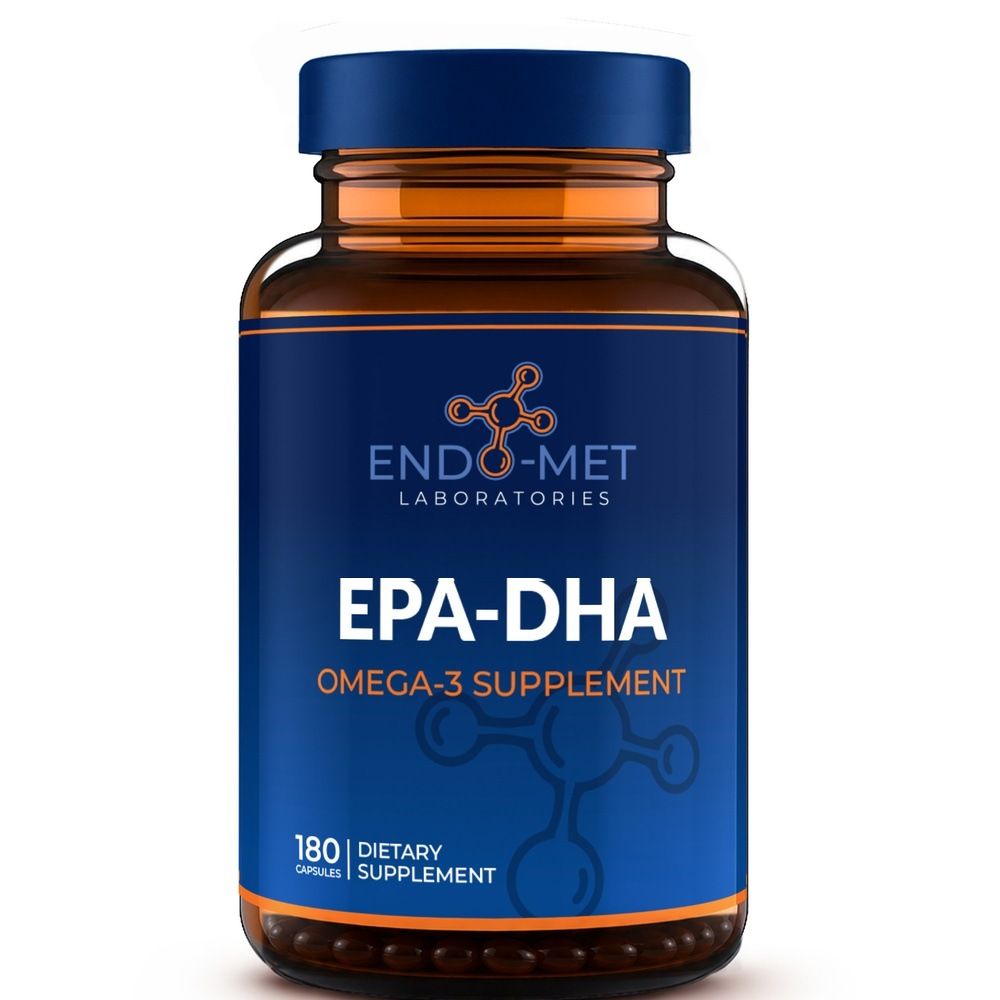
Endo-met EPA-DHA (180 Capsules)
SKU 1468
$55.00
All Oxidation Types
Extended Omega-3 Supply for Heart, Brain, and Joint Wellness
Estimated delivery time
Shipping: 4–8 days
In stock
Customer reviews
Reviews only from verified customers
No reviews yet. You can buy this product and be the first to leave a review.
Endo-met EPA-DHA (180 Capsules)
Product Details
Brand: Endo-met Laboratories
MPN: EPADHA180
Availability: Shipped same day if ordered M-F by 1 pm PST
Shipping: Calculated at Checkout
Bottle Size: Large (120-270)
Supplied In: Softgels
Oxidation Type: Everyone
Primary Function: Specialty
Weight: 0.75 lbs
Endo-met Laboratories
Endo-met EPA-DHA 180 Capsules by Endo-met Labs
Omega-3 Fatty Acids to Support Heart, Brain, and Overall Health
Endo-met EPA-DHA offers a potent source of omega-3 fatty acids from premium marine lipid concentrate, delivering 240 mg of omega-3s per capsule to support cardiovascular, cognitive, and joint health. This cholesterol-free supplement is perfect for individuals looking to increase their omega-3 intake without depending solely on fish in their diet.
Understanding the Benefits and Composition of EPA-DHA Supplements
EPA-DHA supplements, commonly derived from fish oil, are abundant in omega-3 fatty acids that are essential for many bodily functions. Here’s a breakdown of the key benefits they offer:
- Heart Health: EPA (Eicosapentaenoic Acid) and DHA (Docosahexaenoic Acid) play critical roles in supporting cardiovascular health. They help regulate cholesterol levels, promote healthy blood flow, and reduce inflammation, which are all vital for heart health.
- Brain Function: DHA is integral to brain health, supporting cognitive function, memory, and overall mental clarity.
- Joint Support: Omega-3s, particularly EPA, possess anti-inflammatory properties that may aid in reducing joint stiffness and discomfort.
- Eye Health: DHA is also vital for retinal health, supporting vision and protecting against age-related eye conditions.
Product Highlights
| Attribute | Details |
|---|---|
| Form | Softgel Capsules |
| Size | 180 Capsules |
| Recommended Dosage | 1 capsule with each meal, or as directed by a physician |
| Free From | Gluten, Soy, Dairy, Egg, Corn, Casein, Wheat, and Yeast |
Key Ingredients in EPA-DHA
Endo-met EPA-DHA contains essential omega-3 fatty acids from high-quality fish oils, delivering 150 mg EPA and 90 mg DHA per capsule to promote a balanced intake of these crucial nutrients:
- EPA (Eicosapentaenoic Acid): Supports heart health and promotes vascular function.
- DHA (Docosahexaenoic Acid): Essential for brain health and cognitive support.
- Omega-3 Fatty Acids: Contribute to anti-inflammatory responses, helping to manage inflammation in the body.
Supplement Facts
One Softgel Capsule Contains:
- Calories: 9
- Total Fat: 1 gram
- Saturated Fat: 240 mg
- Monounsaturated Fat: 200 mg
- Polyunsaturated Fat: 400 mg
- EPA (Eicosapentaenoic Acid): 150 mg
- DHA (Docosahexaenoic Acid): 90 mg
- Total Omega-3 Fatty Acids: 240 mg (from menhaden cold water fish)
Why Choose Endo-met EPA-DHA?
For those who may not consume fish regularly, Endo-met EPA-DHA provides a convenient way to achieve a balanced omega-3 intake, which is essential for cardiovascular, cognitive, and joint health. This 180-capsule bottle offers an extended supply of omega-3 fatty acids for sustained support. If you prefer a smaller option, see the 90-capsule version.
Consultation and Support
If you’re uncertain if EPA-DHA is right for your health needs, consider a hair analysis or consult a healthcare provider. For further support, call us at 888-932-2526.
*These statements have not been evaluated by the Food and Drug Administration. This product is not intended to diagnose, treat, cure, or prevent any disease.
How to read your dosage — the label is not your dose
The bottle says take one capsule a day. That is the generic label default, and it is almost never what a hair tissue mineral analysis actually calls for.
A lab report prescribes a schedule written as three numbers — morning, noon and evening:
| On your report | What it means |
|---|---|
| 1 | One capsule, once a day |
| 1-1-0 | One in the morning, one at noon, none in the evening |
| 1-1-1 | One with each of the three meals |
| 2-1-1 | Two in the morning, one at noon, one in the evening |
| 2-2-1 | Two, two, then one |
| 1-1-2 | One, one, then two — weighted to the evening |
| 3-3-3 | Three with each meal, nine a day in total |
Those are examples rather than a complete list — reports use many combinations, and the amounts are set from your own oxidation rate and mineral ratios. A formula the label treats as a once-a-day supplement may well be prescribed several times a day on a chart, or only in the morning, or not at all.
So do not work out how long a bottle will last from the label. Work it out from your schedule. If you are on 3-3-3, a 180-count bottle is twenty days, not six months.
If you have a report and are not certain how to read it, send it over — walking people through their own numbers is exactly what the text support is for.
From Eileen Durfee
Curated by Practitioner Eileen Durfee, NBS (Nutritional Balancing Science), NASM-CPT — wellness educator, inventor with 10 U.S. and 6 international patents, author, and Nationally Certified Spinal Fitness Specialist
Endo-met formulas are designed to be chosen from a chart rather than from a list of symptoms, and that is how I use them. The same product can suit one oxidation pattern well and another poorly, which is why I would rather look at your numbers than guess from how you are feeling.
I came to hair analysis in 2010, under ARNP Julie Walker in Kennewick, Washington, and worked directly with Analytical Research Labs — testing family and friends until I could read a chart properly. I listened to every cassette tape Dr. Paul Eck recorded and read every newsletter that laboratory published. When I found out a degree in Nutritional Balancing existed, I signed up with Dr. Larry Wilson in August 2011, and I have practised independently since the autumn of 2017. The most useful thing I can offer is not a longer product list — it is help reading your own chart and adjusting between tests. Mineral patterns almost always shift on a retest, and watching that happen chart to chart is where the real learning is. I hand-select the formulas and the absorbable forms that consistently help people feel and function better.
How I am available to you. If you order a hair analysis, you get text support from me while you are on the program — retracing and detox questions are best answered as they happen, not weeks later. It takes about three months to train someone to understand what is going on and adjust their own program between tests, and that is the goal. Our Facebook group is free to join whether or not you have bought anything: ask questions there and read through the tips already shared.
I also work in order of priorities, to fit your budget. Some people go all out for longevity; others take only what their hair analysis calls for, once a day. Both are worth doing. Tell me where you are and we will start there.
Matched to your chart. Endo-met formulas are designed to be selected from Hair Tissue Mineral Analysis results rather than chosen from symptoms, because the same product can suit one oxidation pattern well and another poorly. If you are unsure whether this one fits you, a hair analysis answers that from your own numbers.
Common questions
How do EPA and DHA support brain and cognitive health?
DHA is the most abundant omega-3 fatty acid in the brain. It is a structural component of neuronal cell membranes and is concentrated particularly in grey matter and in the retina. Membrane composition matters because it governs how fluid the membrane is, how receptors sit within it, and how readily signals pass from one cell to the next.
EPA does a different job. It serves less as structure and more as a precursor to the resolvin and protectin families of signalling compounds, which are part of how the body brings an inflammatory response to an orderly close rather than leaving it running.
Because the turnover of DHA in neural tissue continues throughout life, dietary intake stays relevant long after development is complete. Most Western diets are comparatively low in preformed EPA and DHA, and the body’s conversion from plant-derived ALA is limited — see the next question for the figures.
In practical terms: EPA and DHA support normal brain structure and cognitive function as part of an adequate diet. They are nutrients rather than a therapy. If you have specific concerns about memory or thinking, your healthcare provider is the right person to help you interpret them, and can also advise how supplemental omega-3s sit alongside anything else you take.
How efficiently can the human body convert ALA to EPA and DHA?
The human body's ability to convert α-linolenic acid (ALA), a common omega-3 found in many plants, into the more beneficial fatty acids, eicosapentaenoic acid (EPA) and docosahexaenoic acid (DHA), is significantly constrained. Research indicates that while enzymes such as elongase and desaturase facilitate the conversion, the amount of ALA that transforms into EPA and DHA is remarkably small. Studies suggest a conversion rate of approximately 2% to 10% for EPA, with notably lower rates for DHA.
Key Findings from Studies:
- A study conducted by Goyens et al. reported an approximate 7% conversion of ALA to EPA and a mere 0.013% to DHA, highlighting the limited effectiveness of the body's conversion process.
- Hussein et al. found even lower conversion efficiencies, with 0.3% for EPA and less than 0.01% for DHA, emphasizing the importance of obtaining EPA and DHA through dietary sources.
Conclusion
These findings underscore the need for individuals to supplement their diet with sources rich in EPA and DHA to ensure they can reap the full health benefits of these essential fatty acids.Omega-3 Supplementation and Cognitive Development in Infants: Study Findings
Numerous studies emphasize the crucial role of omega-3 fatty acids during pregnancy, particularly for the cognitive development of infants. Among these, the long-chain omega-3 fatty acids EPA and DHA are essential, with DHA being especially important for the development of the brain and retina.
Key Findings:
- DHA’s Role: DHA contributes significantly to healthy cell membrane function and is vital for the development of fetal brain and retinal tissues. This is particularly critical during the third trimester, when high concentrations of DHA are accumulated in fetal tissues, thus supporting normal vision and cognitive processes.
- Cognitive Benefits: Research has shown that infants whose mothers supplemented with DHA during pregnancy exhibit enhanced cognitive benefits. For instance, a study found that these infants displayed superior problem-solving abilities by nine months of age compared to infants whose mothers did not take DHA.
- Enhanced Skills: Further research looking at children at 2.5 years of age indicated that those whose mothers consumed both EPA and DHA from around 20 weeks of gestation until delivery displayed significantly improved eye-hand coordination skills, outperforming children whose mothers were given a placebo.
Conclusion
In conclusion, omega-3 supplementation, particularly of DHA, during pregnancy is associated with positive outcomes in the cognitive development of infants. This underscores the importance of these essential nutrients in prenatal nutritional strategies.The Benefits of Omega-3 Fatty Acid Supplementation During Pregnancy
Omega-3 fatty acids, particularly EPA and DHA, are essential for both maternal and fetal health during pregnancy. Here are some important benefits of including these nutrients in the diet:
Key Benefits:
- Fetal Brain and Retina Development: Omega-3 fatty acids, especially DHA, are crucial for proper development of the fetal brain and retina. Significant amounts of DHA are accumulated in these areas during the third trimester, which is vital for promoting normal eyesight and cognitive abilities.
- Enhanced Cognitive Skills: Research indicates that infants born to mothers who incorporated DHA supplements during pregnancy show enhanced problem-solving skills. Cognitive evaluations have demonstrated improved eye-hand coordination in children whose mothers took EPA and DHA.
- Longer Gestation Period: The intake of EPA and DHA during pregnancy is associated with longer gestational periods, potentially lowering the chances of preterm births. This is likely due to their role in reducing inflammation in the uterus.
- Protection Against Infant Diseases: Omega-3 supplementation is linked to an increased likelihood of carrying a pregnancy to full term, which helps minimize the risk of diseases and complications related to prematurity.
- Lower Preterm Birth Risk: There is evidence suggesting that omega-3 fatty acids are associated with a decreased risk of preterm delivery. The consumption of these nutrients is related to lower levels of specific prostaglandins, which can lead to inflammation that contributes to preterm labor.
- Allergy Protection for Infants: Studies indicate that omega-3 supplementation during pregnancy and while breastfeeding might offer protective effects against the development of allergies in children. This benefit may stem from the anti-inflammatory properties of fish oil, which helps modulate the immune response.
Conclusion
In conclusion, the supplementation of omega-3 fatty acids during pregnancy is beneficial for developmental health, promotes longer gestation periods, and may provide protective effects against allergies. These factors collectively contribute to healthier outcomes for both mothers and their children.How Fish-Derived Omega-3 Fatty Acids Like EPA and DHA Benefit Fetal Development
The omega-3 fatty acids EPA and DHA, found in fish and fish oil supplements, are essential for the healthy development of a fetus. Since the human body is not efficient at producing these nutrients, it is crucial to obtain them through dietary sources or supplements.
Key Benefits of Omega-3s for Fetal Development:
- Brain and Cognitive Development: Omega-3 fatty acids, particularly DHA, play a critical role in the formation and function of brain cells, supporting the development of cognitive skills and memory in the fetus.
- Vision and Eye Health: DHA is vital for the development of the retina and visual cortex, ensuring that the fetus develops healthy vision and eyesight. This nutrient also supports the overall health of the eyes.
- Heart Health: Omega-3s have been shown to support the development of a healthy heart in the fetus, reducing the risk of cardiovascular issues later in life. They also help regulate blood pressure and maintain healthy blood vessels.
- Immune System Development: EPA and DHA aid in the development of the fetal immune system, helping to protect the baby from infections and diseases after birth. A healthy immune system is essential for overall health and well-being.
- Reducing Inflammation: Omega-3 fatty acids have anti-inflammatory properties, which can help reduce inflammation in the mother and the fetus. Chronic inflammation has been linked to various pregnancy complications and health issues.
Conclusion
Incorporating omega-3 fatty acids into the maternal diet is a simple yet effective way to support fetal development and promote a healthy pregnancy. By providing these essential nutrients, expectant mothers can help give their babies the best possible start in life, supporting their overall health and well-being.Dietary Guidelines for Omega-3 Intake During Pregnancy and Breastfeeding
During the stages of pregnancy and breastfeeding, ensuring an adequate intake of omega-3 fatty acids, particularly EPA and DHA, is vital for both maternal and infant health. Dietary recommendations suggest consuming between 8 to 12 ounces of seafood each week. This should encompass a variety of fish to guarantee a balanced intake of these significant nutrients.
Why is this Amount Important?
Adhering to this seafood intake provides approximately 300-900 mg of EPA and DHA daily, which are crucial for optimal fetal brain development and the overall health of the infant. Despite these guidelines, many pregnant and breastfeeding women across North America do not meet these recommendations, potentially depriving their infants of essential nutrients necessary for healthy growth and development.To Meet the Guidelines:
- Incorporate a variety of seafood into your meals, such as salmon, mackerel, and sardines, which are known for their high omega-3 content while being lower in mercury, making them safe choices for expecting and nursing mothers.
- Distribute your seafood intake evenly throughout the week to ensure consistent levels of omega-3 fatty acids in your diet, which can enhance both maternal and infant health.
Conclusion
By following these recommendations, you can effectively meet the nutritional requirements for yourself and your developing baby, supporting their health during these critical stages.The Impact of Omega-3 Supplementation on Infant Allergy Risk
Omega-3 fatty acids, specifically EPA and DHA, play a critical role during pregnancy and breastfeeding in potentially reducing allergy risks in infants. Supplementation with these essential oils may offer protective benefits for children, primarily by influencing the body's inflammatory and immune responses.
Key Findings:
- Reduced Inflammation: Research suggests that taking fish oil supplements can lead to lower levels of certain inflammatory cells. This reduction is significant as inflammation is closely linked with allergic reactions.
- Enhanced Immune Function: Omega-3 supplements have been shown to alter immune markers, including an increase in TGF-beta, a protein associated with immune regulation. This change may help in curbing the development of allergies in children.
- Lower Allergy Prevalence: A study focusing on food allergies and IgE-associated eczema in infants found a significant decrease in these conditions among the group whose mothers supplemented with EPA and DHA. Compared to a placebo group, these supplements markedly reduced the prevalence of food allergies and the incidence of eczema.
Conclusion
In conclusion, omega-3 supplementation during key developmental periods such as pregnancy and breastfeeding may lead to a reduced risk of allergies in infants, providing a promising strategy for expecting mothers looking to support their child's long-term health.Which Dietary Restrictions Does EPA-DHA Supplement Accommodate?
Pregnant and breastfeeding women can significantly impact their child's risk of developing allergies through the essential oils they consume. Specifically, omega-3 fatty acids (EPA and DHA) have been found to have a profound influence on the infant's immune system, potentially reducing allergy-related issues.
Key Research Findings:
- Reduced Inflammation: Studies have indicated that supplementing fish oil during pregnancy can lead to a decrease in specific inflammatory cells, significantly contributing to allergy risks.
- Modulated Immune Function: Omega-3 fatty acids, particularly EPA and DHA, have been shown to impact immune markers, including increased levels of TGF-beta, a critical protein associated with immune regulation and potentially reducing allergy risks in infants.
- Decreased Allergy Prevalence: Research has demonstrated a significant decrease in the prevalence of food allergies and IgE-associated eczema in infants whose mothers supplemented with EPA and DHA during pregnancy. This reduction is a compelling argument for the role of omega-3 fatty acids in mitigating allergy development.
Conclusion
In conclusion, supplementing with omega-3 fatty acids during critical developmental periods like pregnancy and breastfeeding may have long-lasting effects on a child's allergy susceptibility. As such, pregnant women seeking to reduce their child's risk of allergies and related issues may find omega-3 supplementation a valuable strategy for supporting their child's long-term health.Important Considerations for Safe and Effective Use of EPA-DHA by Endo-Met Supplements
Guidelines for Using Endo-Met Supplements: Personalized Nutrition for Optimal Health
Tailoring nutrition to individual needs is crucial for effective supplementation. Endo-Met supplements are designed to be used in conjunction with HTMA (Hair Tissue Mineral Analysis) results, providing a personalized approach to addressing nutritional deficiencies. For pregnant individuals, Endo-Met supplements are considered safe for use, but breastfeeding mothers require re-testing to ensure accurate dosing recommendations from a qualified Health Practitioner trained in Hair Analysis.
Customizing Your Supplementation
The recommended dosage of EPA-DHA by Endo-Met supplements varies depending on individual needs as determined by the HTMA. Typically, the suggested daily intake ranges from one (1) to three (3) capsules, taken two to three times a day with meals. To ensure safe and effective use, collaborate with a Health Practitioner with expertise in Hair Analysis. If an HTMA test is not feasible, please adhere to the dosing instructions provided on the supplement packaging.
Supply Duration and Flexibility with EPA-DHA Supplements
Each bottle of EPA-DHA contains 180 capsules, and when taken according to the recommended guidelines, the supply can last anywhere from 30 to 180 days. The actual duration largely depends on individual dosage and usage requirements.
Estimated Supply Durations:
- 30 days: For individuals consuming 6 capsules daily, such as taking 2 capsules three times a day, the supply will last about 1 month.
- 60 days: A moderate intake of 3 capsules daily (1 capsule taken three times a day) would provide a supply lasting approximately 60 days.
- 90 days: If you opt for a dosage of 2 capsules daily, you can expect the supply to last around 90 days.
- 180 days: Individuals taking just 1 capsule daily would enjoy a supply lasting up to 6 months.
These durations are rough estimates based on average consumption patterns. Your actual supply duration may differ based on your individual needs and dosage preferences.
EPA-DHA is manufactured by Endo-Met Laboratories, whose formulas were developed around Dr. Paul C. Eck’s approach to mineral balancing. Explore the full line on our Endo-Met supplements page.
Not sure if this is the right formula for you?
Endo-met formulas work best when they are matched to your mineral pattern. A hair tissue mineral analysis shows your levels and toxic element exposure, and the kit is mailed to you with a scale. Or simply call us on 888-932-2526 and ask.
These statements have not been evaluated by the Food and Drug Administration. This product is not intended to diagnose, treat, cure, or prevent any disease. Wellness Shopping Online is operated by Nuco Enterprise Solutions LLC. Your healthcare provider can help you decide what fits your individual situation.