Trace Elements HTMA Hair Analysis
Hair Tissue Mineral Analysis (HTMA) by Trace Elements, Inc.
Hair tissue mineral analysis measures 37 elements in a small sample of new hair growth — 15 nutrient minerals, 8 toxic metals, and 14 additional elements — and reads the relationships between them. That last part is what separates HTMA from an ordinary mineral panel, and it is where the useful information lives.
The idea came out of a soil laboratory
Hair analysis descends from agricultural science. At the University of Missouri, soil scientist Dr. William Albrecht demonstrated that soil fertility depends less on how much calcium, magnesium, potassium and sodium a field contains than on the proportions between them. A soil could test adequate for every cation and still grow poor crops if the balance was wrong.
Albrecht expressed those relationships as a Mineral Wheel. Dr. Paul Eck adapted that same wheel to human tissue, and the ratio-first approach was developed further by Dr. Larry Wilson and by Dr. David L. Watts at Trace Elements, Inc. Four decades of clinical refinement later, the four minerals at the centre of Albrecht's soil work — calcium, magnesium, sodium and potassium — are still the four that anchor a hair analysis.
Why it matters to you: a mineral level can sit inside the normal range while the ratio it belongs to is well outside it. Reading levels alone misses that entirely. This is the single most common reason people are told their testing is “normal” while they still feel unwell.
What the test actually measures
Nutrient minerals (15)
| Mineral | Role in the body |
|---|---|
| Calcium (Ca) | Bone structure, nerve transmission, muscle contraction; a sedative mineral that slows the metabolic rate when it accumulates. |
| Magnesium (Mg) | Energy production and several hundred enzymatic reactions; relaxes muscle where calcium contracts it. |
| Sodium (Na) | Fluid balance, nerve and muscle function; closely tied to aldosterone and adrenal activity. |
| Potassium (K) | Cellular and cardiovascular function; paired with sodium in the sodium pump. |
| Zinc (Zn) | Immune function, protein synthesis, wound healing, insulin storage in the pancreas. |
| Copper (Cu) | Iron metabolism, red blood cell formation, collagen cross-linking through lysyl oxidase. |
| Phosphorus (P) | Bone strength and cellular energy; a marker of protein status and anabolic activity. |
| Iron (Fe) | Oxygen transport and electron transport in energy production. |
| Manganese (Mn) | Bone development, carbohydrate metabolism, antioxidant enzymes. |
| Chromium (Cr) | Studied for its part in carbohydrate metabolism and insulin signalling. |
| Selenium (Se) | Thyroid hormone conversion and glutathione peroxidase activity. |
| Boron (B) | Studied in relation to bone and mineral metabolism. |
| Cobalt (Co) | The metal at the centre of vitamin B12. |
| Molybdenum (Mo) | Sulfite oxidase and the breakdown of sulfur-containing amino acids. |
| Sulfur (S) | Amino acids, enzymes and structural proteins; central to detoxification pathways. |
Toxic metals (8)
| Element | Why it is measured |
|---|---|
| Lead (Pb) | A bone-seeking metal; over 90% of the body burden is stored in bone, so it can surface on a later test as it mobilises. |
| Mercury (Hg) | Soft-tissue affinity, particularly kidney and liver. |
| Arsenic (As) | Often traced to well water; a common finding in geographic pockets. |
| Cadmium (Cd) | Competes with zinc and interferes with zinc-dependent enzymes. |
| Aluminum (Al) | Widespread environmental exposure; measured for burden and for its antagonism with other minerals. |
| Nickel (Ni) | Occupational and dietary exposure. |
| Uranium (U) | Naturally occurring; elevated readings frequently point to a private water supply, and often to radon in the same home. |
| Beryllium (Be) & Antimony (Sb) | Industrial exposures that most panels never look for. |
Additional elements (14) — the part most panels omit
Germanium, barium, bismuth, rubidium, lithium, platinum, thallium, vanadium, strontium, titanium, tungsten, zirconium, tin and nickel are reported as additional elements. Several of these have no established nutritional requirement in humans; they are measured as exposure markers, not as nutrients. Thallium and platinum in particular are rarely offered elsewhere.
This is why I recommend Trace Elements, Inc. for testing. Thirty-seven elements is a genuinely wider field of view than the standard panel, and the additional elements have repeatedly explained findings that the core minerals alone could not.
Ratios: where the interpretation happens
Six ratios carry most of the interpretive weight. Each one is read against an ideal, and the distance from ideal is what gets acted on.
| Ratio | Known as | What it reflects |
|---|---|---|
| Ca/Mg | Blood Sugar Ratio | Calcium is required for insulin release; magnesium restrains it. A wide deviation shows a trend toward blood sugar instability. |
| Ca/K | Thyroid Ratio | The efficiency of energy production, and thyroid hormone effect at the cellular level. |
| Na/Mg | Adrenal Ratio | Energy output. Sodium tracks aldosterone, so this ratio speaks to adrenal activity. |
| Na/K | Vitality Ratio | The sodium pump and the electrical potential across the cell membrane. It falls as a person moves toward exhaustion. |
| Zn/Cu | — | Hormonal and immune balance; a low ratio points toward copper excess, a high one toward copper deficiency. |
| Ca/P | — | Autonomic state. A low ratio leans sympathetic, a high ratio parasympathetic. |
Ca/P is the reason the lab choice matters
Both major interpretive systems read Ca/P the same way. They differ in what they do with it. Dr. Watts weights Ca/P heavily and will move a person between a fast and a slow metabolic programme on the strength of it — which means the supplement pack can change based on a ratio that other systems record but do not act upon. When the goal is getting the programme right rather than simply getting numbers back, that difference is worth having.
Metabolic type: what the report tells you about yourself
A hair analysis does not stop at a list of minerals. The pattern of those minerals sorts into a metabolic type, and the type determines the dietary and supplement direction.
- Fast metabolic type — sympathetic dominance. Higher sodium and potassium relative to calcium and magnesium; a raised metabolic rate, often with anxiety, warmth and weight carried centrally.
- Slow metabolic type — parasympathetic dominance. Higher calcium and magnesium relative to sodium and potassium; a lowered metabolic rate, often with fatigue, feeling cold and weight carried on the hips and thighs.
Within each of those, subtypes describe where in the stress sequence a person currently sits — alarm, chronic resistance, or burnout. That is why two people can share a metabolic type and need different support: one is early in the pattern and one has been holding it for years.
A single test cannot say how long a pattern has been in place. You may or may not currently experience the issues a pattern is associated with — but held for an extended period, those are the kinds of issues it trends toward. That is the real value here: hair analysis is somewhat predictive, which gives you the chance to shift out of a danger zone before it becomes a diagnosis. It is also why retesting, rather than a single snapshot, is where the picture becomes clear.
HTMA and blood work answer different questions
These are not competing tests and there is no need to choose between them. Blood is a tightly regulated transport medium — the body defends serum values at the expense of tissue stores, which is exactly why serum can read normal while tissue does not. Hair reflects what was deposited over roughly the last three months of growth.
The pattern I see most often looks like this: blood work comes back unremarkable, symptoms remain medically unexplained, and a hair analysis finally shows measurable deviations from ideal — giving a clear direction for improving function. Run both. They measure different things and they complement each other.
Collecting the sample
- Scalp hair only, taken from several sites between the mid-parietal and occipital regions — the same region Trace Elements, Inc. established its ideal values against.
- About a teaspoon of new growth. The kit that arrives includes a small scale so you can weigh it properly.
- Cut close to the scalp and keep only the first inch and a half, discarding the rest. Longer hair records years of accumulated exposure rather than current status — in one published segment study, calcium read 27 mg% at the scalp and over 200 mg% at the far end of a 22-inch strand.
- Use good stainless steel scissors. Rusty blades add iron to the reading and chrome-plated blades add chromium.
- Note any shampoos, conditioners or dyes on the form so they can be accounted for.
Samples are analysed unwashed, because washing removes more than 90% of the sodium and potassium — the two minerals the Vitality Ratio depends on. Analysis is performed by Trace Elements, Inc., an H.H.S. licensed clinical laboratory (No. 45 D0481787).
Testing for dogs and horses
The same analysis is available for dogs and horses, with species-appropriate reference ranges and the same graphic presentation of levels and ratios. Animals share our households, our water and our dust, which sometimes makes a pet the clearest indicator of a household exposure.
From Eileen
I came to hair analysis in 2010, under ARNP Julie Walker in Kennewick, Washington, and then worked directly with Analytical Research Labs — running tests on family and friends until I could see what the charts were really telling me. I listened to every cassette tape Dr. Paul Eck recorded, the man who founded that laboratory, and read every newsletter it ever published. When I found out you could actually take a degree in Nutritional Balancing, I signed up with Dr. Larry Wilson in August 2011, and I have practised independently since autumn 2017.
Before any of it I was a nuclear quality engineer, which is where I learned to read data for what it actually shows rather than what I hoped it would show.
The mistake I see most often with hair analysis is people fixating on a single low number. It feels obvious — zinc is low, so take zinc. But we generally do not supplement to a low level, because there is an order of priority, and the ratios outrank the individual readings. Here is a real example: if sodium and zinc are both very low, adding zinc is usually the wrong move, because zinc lowers sodium and raises potassium. That drives the Na/K ratio down, and Na/K is the more important number. Correcting the zinc would make the person worse. That kind of reasoning is what a properly interpreted report buys you, and it is not something you can do from a list of levels.
How I am available. Hair analysis clients get text support from me while they are on their programme, which is when questions about retracing and detox symptoms tend to come up. It usually takes about three months of working together before someone understands their own chart well enough to adjust their programme between tests, and that is the goal — I would rather teach you to read your own results. Our Facebook group is free to join whether or not you have ever bought anything, and there are years of questions already answered in it.
I also work in order of priorities to fit your budget. Some people go all out for longevity; others take only the hair analysis supplements once a day. Both are fine. Tell me where you are and we will start there.
Eileen Durfee, NBS (Nutritional Balancing Science), NASM-CPT — wellness educator, inventor with 10 U.S. and 6 international patents, author, and Nationally Certified Spinal Fitness Specialist.
Order your hair analysis
- HTMA Profile 2 & Pattern Report (Initial) — the full first-time option, lab assay plus a written pattern report
- HTMA Profile 3 & Pattern Report (Retest) — for comparing chart to chart
- Trace Elements Profile 2 HTMA Test - Initial Hair Mineral Analysis — lab assay only
- Trace Elements Profile 3 HTMA Retest - Follow-Up Hair Mineral Analysis — lab assay only
Programme supplements are stocked here as complete lines: Trace Elements, Inc. and Endo-met® Supplements.
Frequently asked questions
How many elements does the test measure?
Thirty-seven — 15 nutrient minerals, 8 toxic metals and 14 additional elements. The additional elements include thallium, platinum, titanium, tungsten, zirconium and barium, which most hair panels do not report.
Why do ratios matter more than individual mineral levels?
Because a level can be normal while the relationship it belongs to is not. This is the principle Dr. Albrecht established in soil science and Dr. Eck carried into human tissue: proportion drives function. A calcium reading tells you little until you see it against magnesium, potassium and phosphorus.
Should I get a hair analysis instead of blood work?
No — get both. They measure different things. Serum values are defended by the body at the expense of tissue stores, so blood can read normal while tissue mineral relationships are well off ideal. The two together give a fuller picture than either alone.
How much hair is needed, and where from?
About a teaspoon of new growth from several spots between the mid-parietal and occipital areas of the scalp, cut close and trimmed to the first inch and a half. The kit includes a scale so you can weigh the sample rather than guess.
Can a hair analysis diagnose a disease?
No. It identifies mineral patterns and the trends associated with them. It cannot tell you how long a pattern has been present, and it is not a diagnosis. Its usefulness is that it is somewhat predictive, so patterns can often be addressed before they produce symptoms. Please keep working with your own healthcare provider alongside it.
Why did a toxic metal appear on my second test but not my first?
Because the body sequesters what it cannot excrete. Lead and cadmium are stored in bone, mercury in soft tissue. As a programme improves elimination, stored metals mobilise and begin showing up in hair. A rising reading often means the metal is on its way out, not that exposure is new.
How often should I retest?
Patterns almost always shift, and the comparison between charts is where the real information is — a single test is a snapshot, while two tests show direction. Retesting also catches the mobilisation described above, which changes what a programme should be doing next.
Do you test animals?
Yes, dogs and horses, with species-appropriate reference ranges. Pets share your water and household dust, so they sometimes reveal an exposure before anyone else in the house shows it.
These statements have not been evaluated by the Food and Drug Administration. Hair tissue mineral analysis is a screening tool for nutritional and toxic element status; it is not intended to diagnose, treat, cure or prevent any disease. Your healthcare provider can help you fit this information into a plan that suits you.
التحسين حسب
Hair Analysis
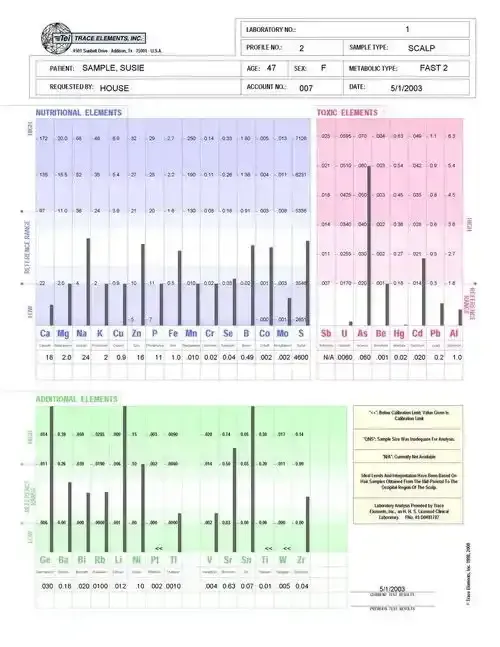
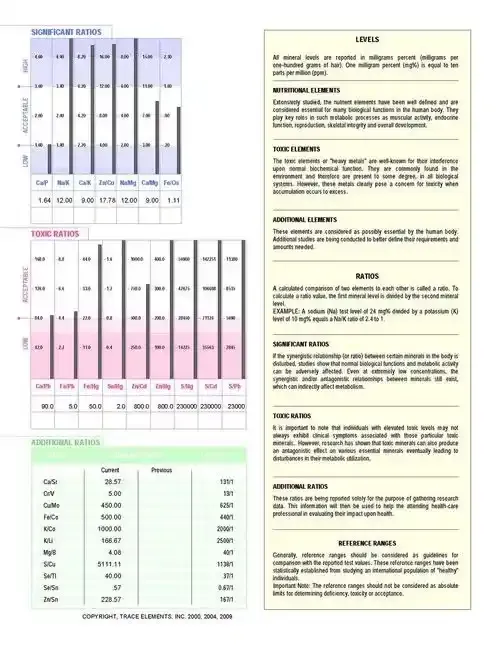
Trace Elements Profile 2 HTMA Test - Initial Hair Mineral Analysis
Trace Elements Profile 2 HTMA Test - Initial Hair Mineral Analysis
Comprehensive mineral and toxic metal analysis for accurate health insights. Discover your body's mineral balance with Trace Elements Inc.'s Profile 2 Multi-Element Assay that includes boron.
SKU 1628
$192.00
Hair Analysis
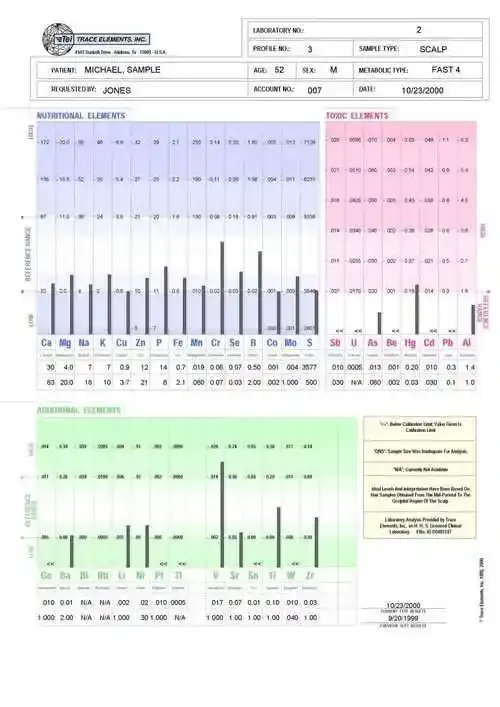
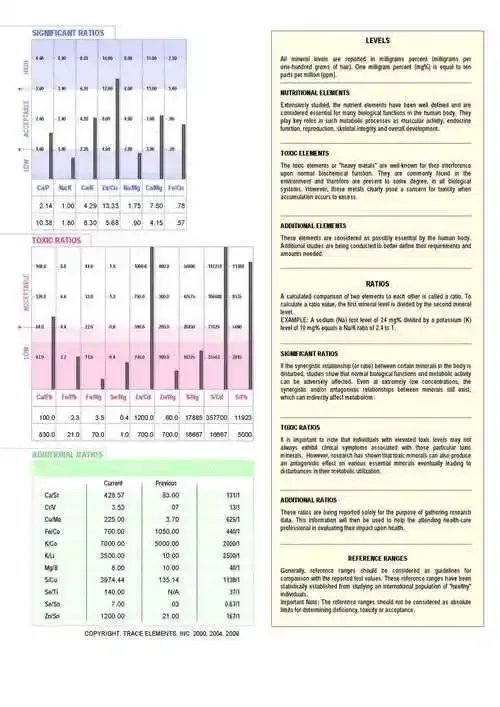
Trace Elements Profile 3 HTMA Retest - Follow-Up Hair Mineral Analysis
Trace Elements Profile 3 HTMA Retest - Follow-Up Hair Mineral Analysis
Comprehensive Profile 3 retest for mineral and toxic metal analysis with comparison to previous Profile 2 results from Trace Elements Inc. (TEI) that includes boron.
SKU 1629
$182.00
Hair Analysis
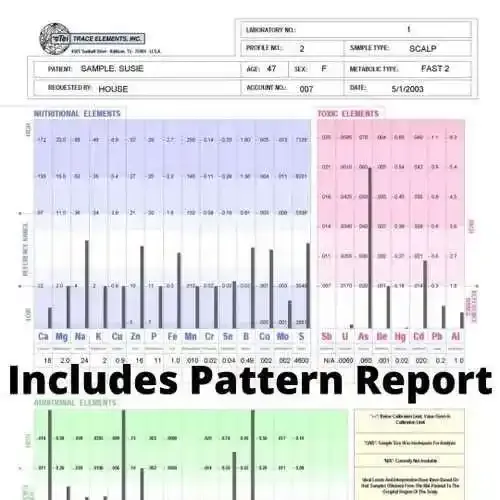
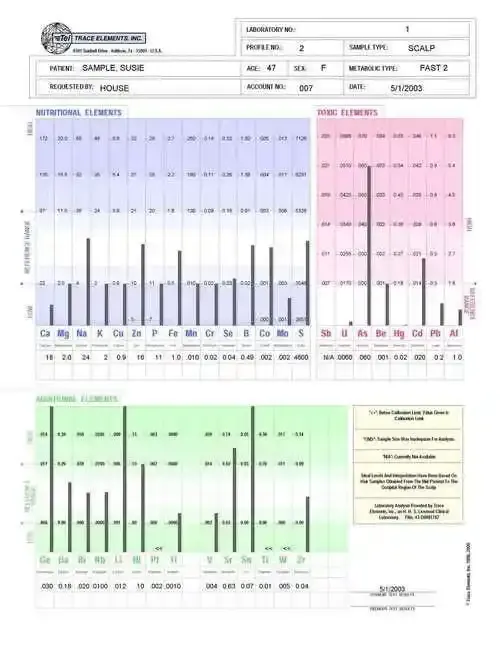
Trace Elements Profile 2 HTMA Test & Pattern Report - Initial Hair Analysis
Trace Elements Profile 2 HTMA Test & Pattern Report - Initial Hair Analysis
Comprehensive Profile 2 Initial HTMA Analysis and Expert Pattern Report by Trace Elements Inc. This comprehensive analysis evaluates your mineral and toxic metal levels and features a personalized Pattern Report crafted by health expert Eileen Durfee.
SKU 2054
$270.00
Hair Analysis
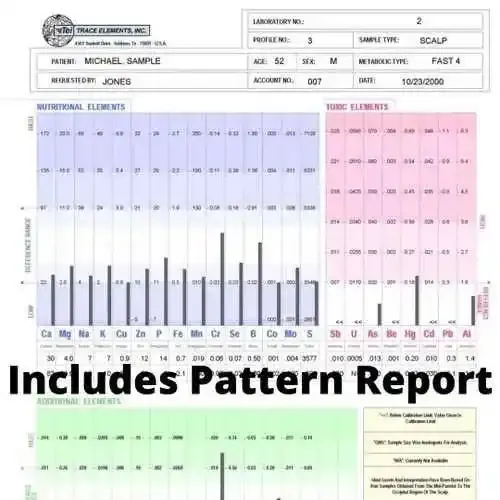
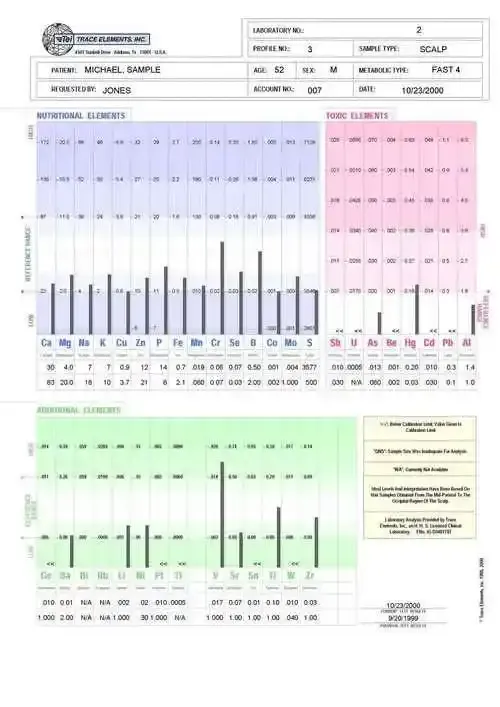
Trace Elements Profile 3 HTMA Retest & Pattern Report
Trace Elements Profile 3 HTMA Retest & Pattern Report
Monitor Progress with the Profile 3 HTMA from Trace Elements Inc. This follow-up analysis includes an expertly crafted Pattern Report by health expert Eileen Durfee, providing personalized insights to refine your wellness plan and track your progress.
SKU 2055
$260.00
Hair Analysis
HTMA Canine Profile 10 Multi-Element Assay (Initial and Retest)
HTMA Canine Profile 10 Multi-Element Assay (Initial and Retest)
Hair tissue mineral analysis for dogs from Trace Elements, Inc.: 31 elements, charts of mineral levels and ratios, and supplement recommendations based on the mineral patterns found.
SKU 1630
$145.00